How to Flush a Tankless Water Heater (Hard Water Guide)
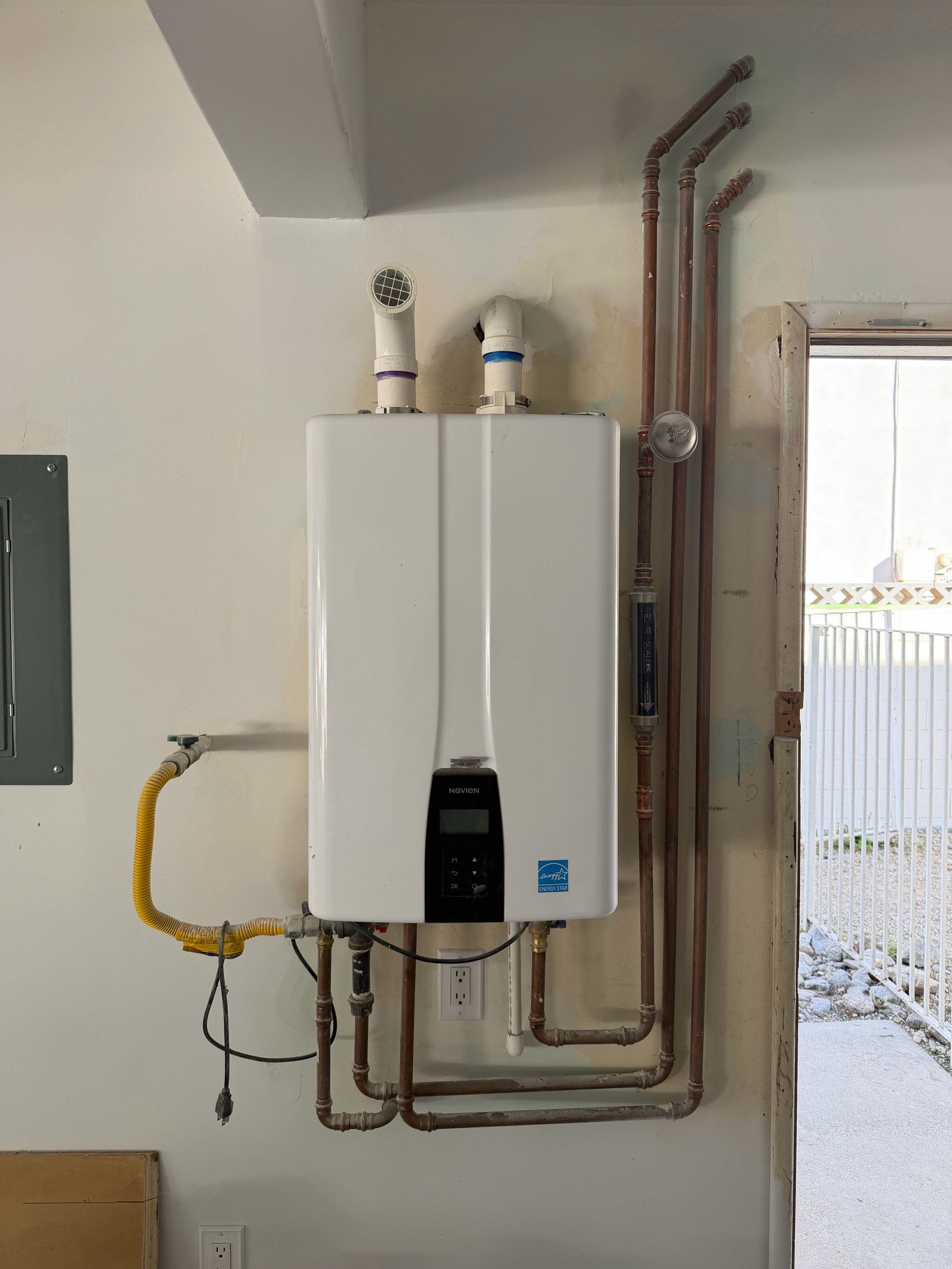
If you have a tankless water heater in hard water, descaling is regular maintenance, not a maybe. Hard water leaves mineral scale inside the heat exchanger, and that buildup can cut flow, trip error codes, and damage the unit if it is ignored. This guide is written by a working plumber under Well Plumbed Home, for homeowners who want to flush a Noritz or Navien tankless heater, or who want to understand the job first. It is current as of November 2026. Follow the manual that came with your exact model.
Disclosure: This post contains affiliate links. If you buy through those links, Well Plumbed Home may earn a commission, at no extra cost to you. I only recommend products I would actually use on a tankless heater in this water. Prices change, so check the current price before you buy.
Why tankless heaters scale up in hard water
A tankless heater warms water as it passes through a narrow heat exchanger. Calcium and magnesium in hard water drop out of solution on those hot surfaces and form scale, which insulates the exchanger, reduces flow, and can overheat the unit.
Hardness varies by utility and sometimes by season, so the number that matters is the one for your house. Look up the annual Consumer Confidence Report (also called a water-quality report) from the utility on your water bill; it is usually posted on the utility’s website. It should list hardness as calcium carbonate, typically in milligrams per liter (mg/L) or parts per million. If the report does not list hardness, or you are on a private well, a hardness test strip or a lab test will give you a usable figure.
The U.S. Geological Survey classifies hardness as calcium carbonate this way: 0 to 60 mg/L is soft, 61 to 120 mg/L is moderately hard, 121 to 180 mg/L is hard, and more than 180 mg/L is very hard. One grain per gallon (gpg) is about 17.1 mg/L, so those same ranges are roughly 0–3.5 gpg, 3.6–7.0 gpg, 7.1–10.5 gpg, and more than 10.5 gpg.
Both Noritz and Navien treat 200 mg/L as 12 gpg and use that figure as a water-quality limit. Water at or above that line is already in the USGS “very hard” range.
How often to flush, according to the manufacturers
Use your model’s manual, your water hardness, and whether a treatment device is already installed. Both brands treat untreated hard water as an annual job, and sometimes more often.
Noritz. The EZ Series installation manual’s treatment table (in the May 2024 manual I reviewed) says soft and slightly hard water, up to 3 gpg (51 mg/L), needs no treatment device and no routine flush. From 3 gpg up, including water over 12 gpg (200 mg/L), Noritz calls for a Scale Shield or a water softener and a flush once a year. A footnote says flushing is required if a treatment device is not installed. The Noritz NRCR owner’s guide also says hard-water areas need periodic flushing. The heater has a descaling reminder, but the factory default is off; you or the installer have to turn it on. When it is on, the display shows a C1# code (the # is a number from 1 to 9) after the set interval, and Noritz says the heat exchanger needs to be flushed when that code appears. The same guide lists a maximum hardness of 200 mg/L (12 gpg).
Navien. Navien’s descaling article recommends descaling at least once a year, and more often if mineral content, set temperature, or hot-water use is high. The NPE-2 Installation & Operation Manual (October 2024) says flushing is recommended if no treatment device is installed: no flush for soft water at 0–4 grains/gal (0–60 mg/L); a water softener or Navien PeakFlow is recommended at 4–9 grains/gal and highly recommended at 9–12; a softener or PeakFlow is required above 12 grains/gal (200 mg/L). The listed residential flush interval is once a year (twice a year for commercial use at 9–12 grains/gal).
On NPE-A2 and NPE-S2 units, E760 is a flushing/service alarm; the NPE-2 user’s information manual tells you to contact the installer for routine service. E016 (heat-exchanger overheating) and E030 (exhaust overheating; the heater shuts down when flue temperature exceeds 149°F) also point you to a flush and a filter cleaning. Those are more serious than a reminder. If either appears, follow the manual; if the code returns after a proper flush and filter cleaning, have a licensed technician look at the unit. The installer menu has a descaling reminder (no alarm, or 6, 12, or 24 months; default is no alarm) and a service-notification timer (default 1,820 days). Navien says that menu must be set by a qualified professional.
Use your own hardness number against the tables above. If it is at or above 12 gpg (200 mg/L), both brands treat the water as requiring treatment plus at least an annual flush. Do not wait if a C1# or E760 reminder is already on the display.
What you need before you start
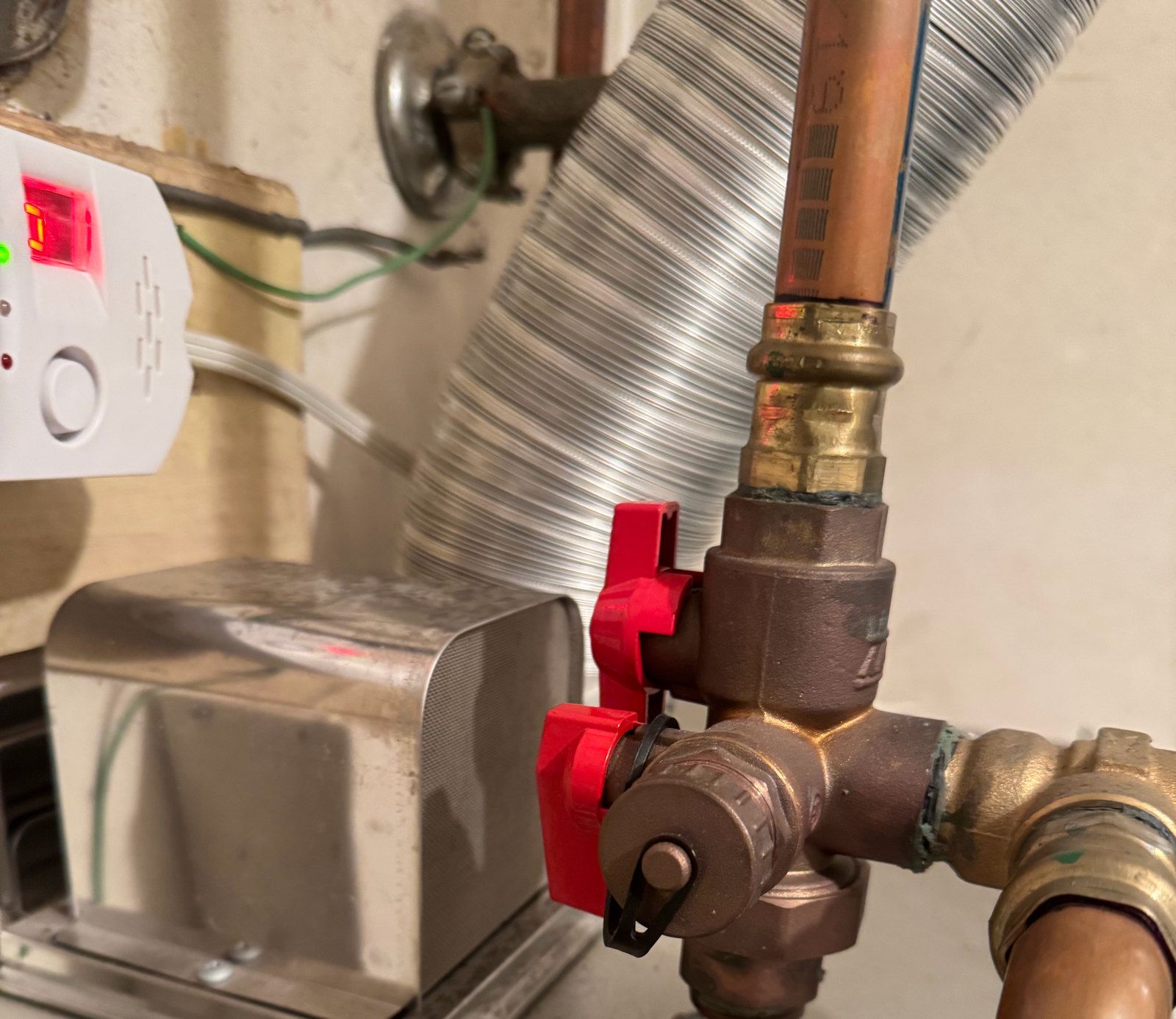
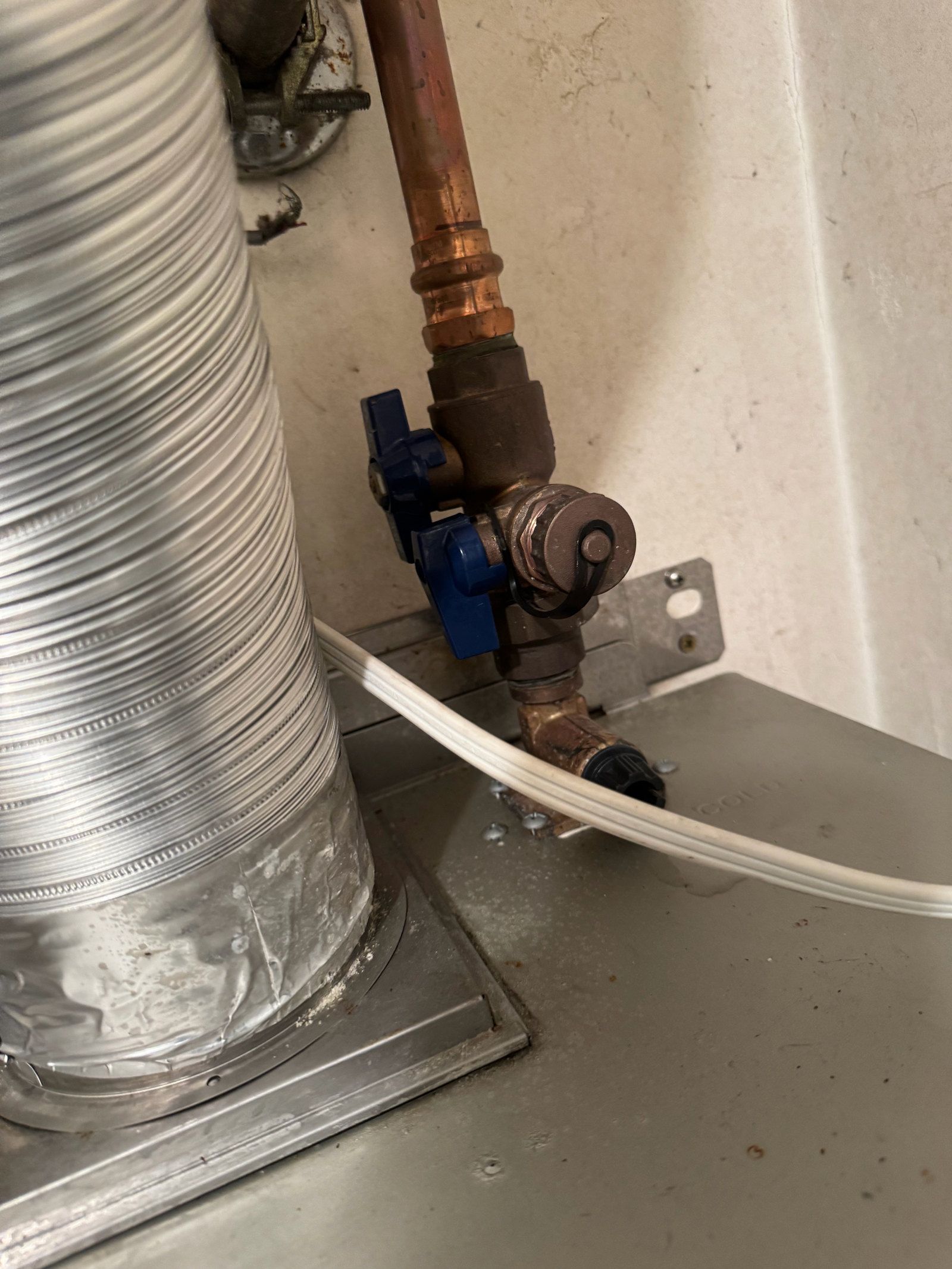
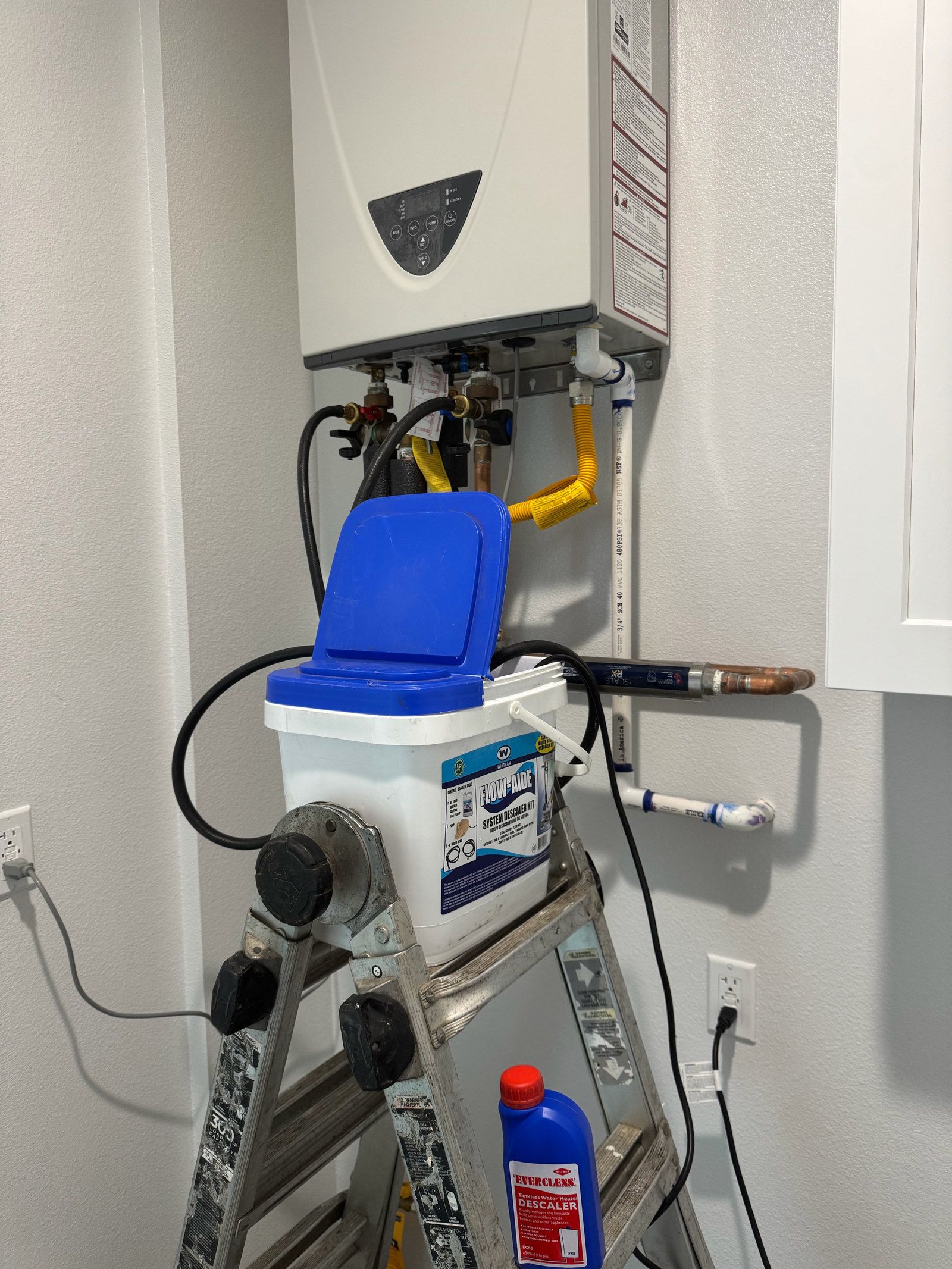
You cannot flush the heat exchanger cleanly without isolation valves on the hot and cold connections. If the heater was installed without them, the valves have to be added first. You will also need a circulation or utility pump, hoses that fit the valve drains, and a bucket. Navien’s user’s manual calls for a bucket that is 5 gallons or larger.
For the solution, Navien says to use white vinegar or a cleaner specifically formulated for tankless water heaters. Noritz’s EZ Series flush procedure calls for 1 gallon of a “Calcium, Lime and Rust Removal Product” mixed with 1 gallon of water, circulated for 1 hour at 1.5 gallons per minute or more. I have specific kits and valves in the gear list below. When a kit advertises a shorter cleaning time than your manual, follow the manufacturer.
How to flush the heat exchanger
Read your model’s manual all the way through before you open a valve. Noritz and Navien differ on circulation time, rinse time, and whether the unit stays powered, so use the timing and control steps from your brand.
Safety first. To prevent burns, turn the heater off at the control panel and let it cool before you drain water or pull a filter, as both brands instruct. Close the gas supply valve if your manual says to — Noritz’s flush procedure does. Work where spilled solution will not damage a floor, do not mix cleaners, and follow the label on any formulated descaler.
- Turn the heater off at the front panel or remote. For a Navien, also disconnect power as the user’s manual directs. For a Noritz flush, the installation manual says the unit must remain connected to electrical power so it can be placed in scale-flushing mode from the app or the circuit board.
- Close the isolation valves on the hot and cold lines, then open the service drains.
- Hook the pump and hoses so solution flows into the cold side and returns from the hot side to the bucket. If the display or flow reading never changes, the hoses may be reversed.
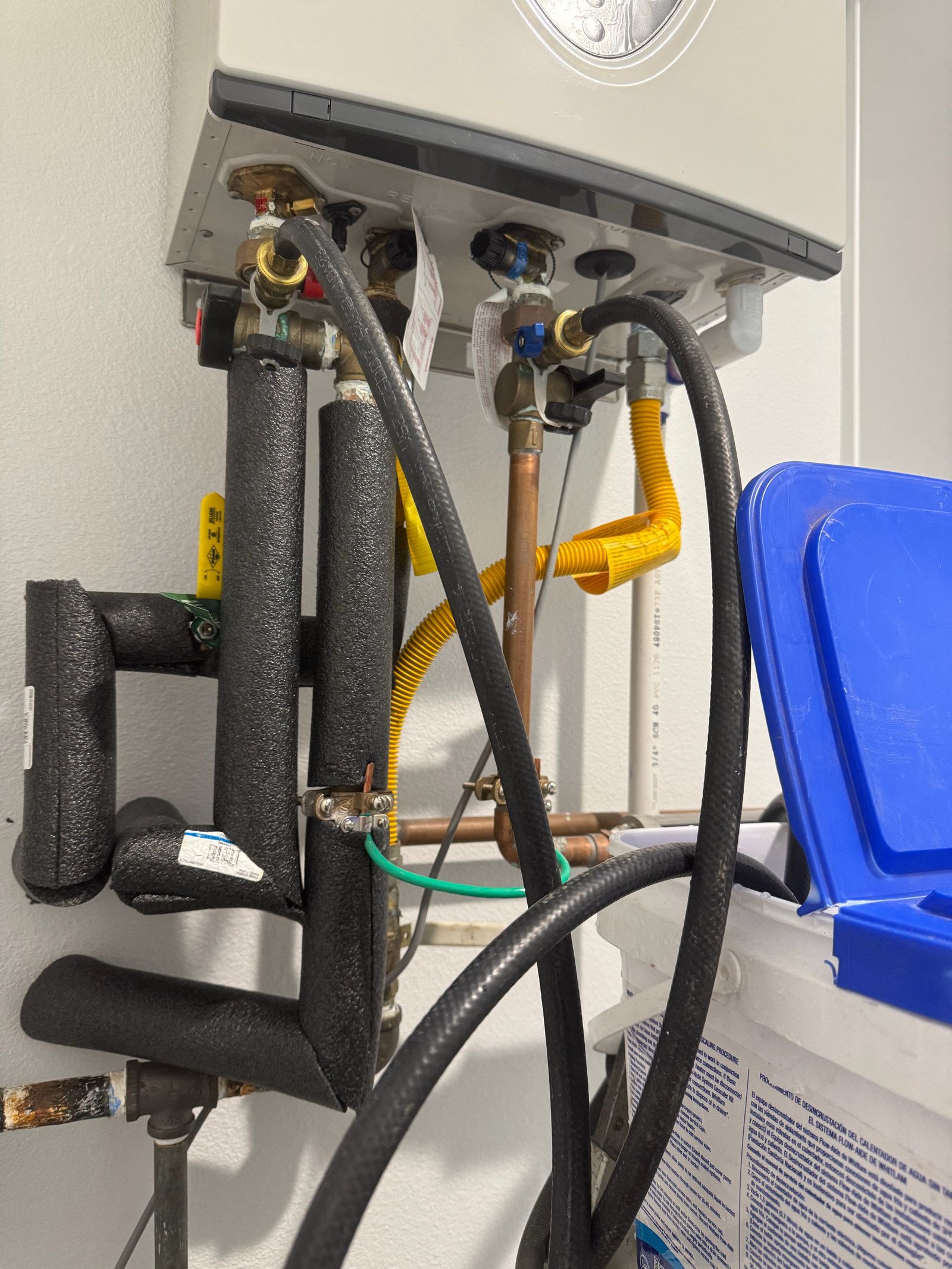
- Pour the cleaning solution into the bucket, with enough volume that the pump stays submerged. For a Noritz flush, use 1 gallon of the lime-and-rust product plus 1 gallon of water. For a Navien, use white vinegar or a tankless descaler, diluted as directed.
- Open the service drains, start the pump, and circulate. Navien: at least 45 minutes, per the user’s manual and Navien’s descaling article. Noritz: 1 hour at 1.5 GPM or more, after the unit is in flushing mode (the display shows CCC, then C60 when it sees flow, then a flashing C00 at the one-hour mark).
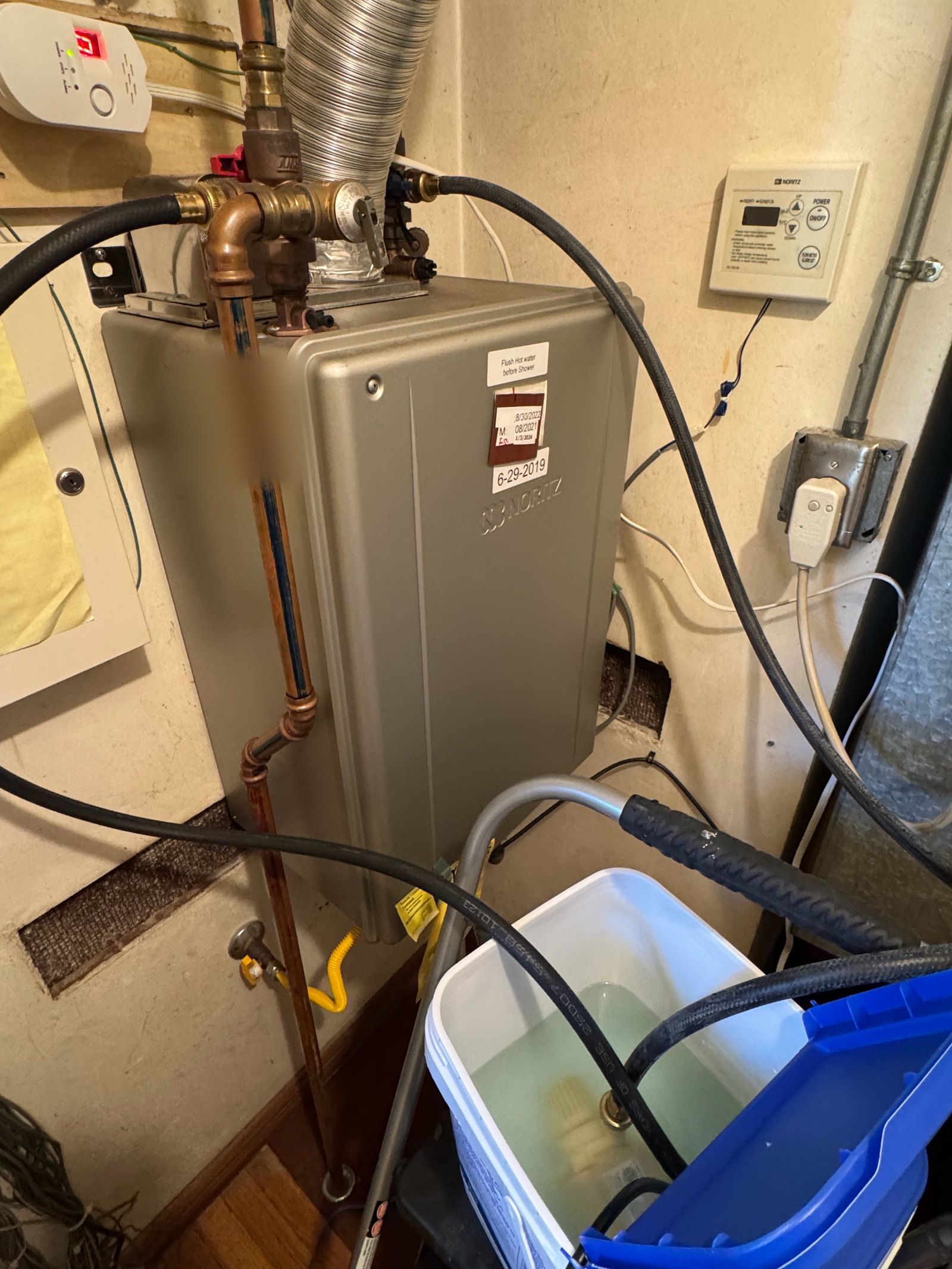
- Shut off the pump and rinse with clean water. Navien’s user’s manual has you rinse to a drain or laundry tub for 5 minutes, with the cold-side house valve open and the hot-side house valve still closed; Navien’s descaling article says to flush with fresh water for a minimum of 10 minutes. Noritz’s procedure is to close the pump-side drain, open the cold inlet, run clean water through the heater for at least 3 minutes, and briefly open the drain valve on the bottom of the unit. When the two sources differ, use the longer rinse.
- Close the service drains, remove the hoses, and return the isolation valves to normal operating position. Reopen the gas valve if you closed it. Restore power as your manual directs, then confirm the heater fires and delivers stable hot water.
Clean the inlet filter while you are there
Flushing the exchanger is only half of the job. Both brands put a screen in the cold-water inlet, and Navien NPE-A2 models have a second screen on the recirculation inlet. Debris on those screens will cut flow even after a good descale.
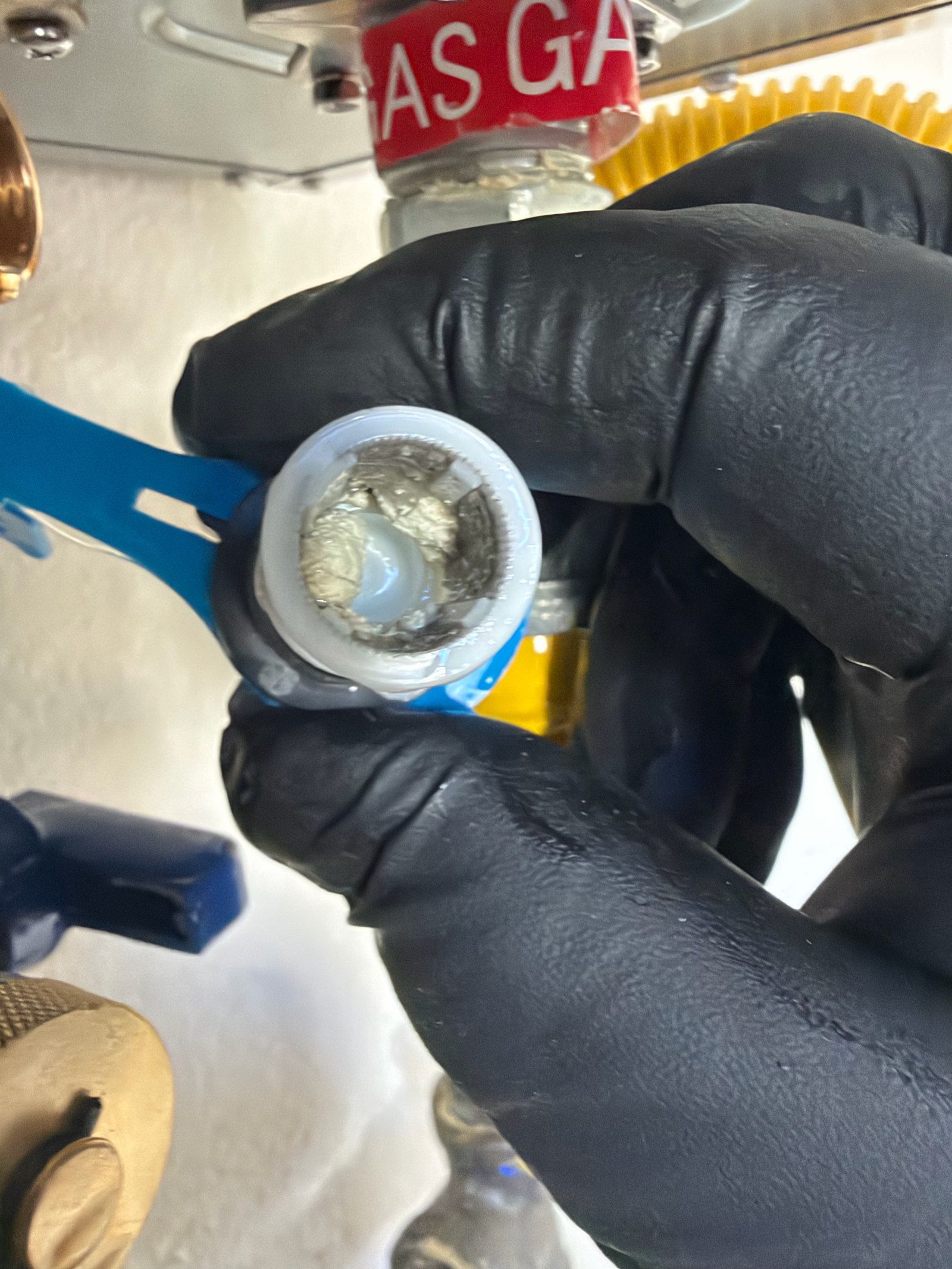
On a Noritz, close the hot and cold valves (and the return valve on recirculating models), pull the drain valve with the filter over a bucket, brush the screen under running water, reinstall it without losing the o-ring, then reopen the valves and check for leaks. On a Navien, drain the heater first, rinse each filter under cold running water, scrub with a brush if needed, reinstall them snugly, and refill the unit. Navien also has an air-intake filter that should be cleaned every 3 to 4 months; a clogged intake can produce error code E110.
What the warranties actually say about scale
I am summarizing the published terms as of November 2026. Your warranty is the document that came with the unit, or the current terms on the manufacturer’s site.
Noritz’s limited warranty is void if a contributing factor to the failure is damage from untreated or poorly treated well water, or from water with high pH or hardness in excess of 12 grains per gallon (200 mg/L). The owner’s guide is more specific: damage is not covered if the water exceeds 12 gpg, if water quality is otherwise outside Noritz’s limits, or if a C1# descaling reminder has been displayed and the heat exchanger has not been flushed. The EZ Series flush procedure is written for a qualified service professional or authorized Noritz representative, and the manual warns that unauthorized performance of that procedure may not be covered.
Navien’s NPE-A2 limited warranty is void for failure to perform regular maintenance or to follow the user’s manual, and for “any damage caused by local adverse conditions including but not limited to hard water deposits, lime or mineral build-up.” The NPE-2 installation manual also says damage caused by poor water quality is not covered, and it lists a maximum hardness of 200 mg/L (12 grains/gallon). The user’s manual warns that flushing is a somewhat complicated procedure and that improper maintenance can void the warranty.
Treatment and on-time flushing are how you stay inside those rules. They are not a promise that a claim will be paid. Keep receipts and a dated note of each flush.
How to slow the scale down between flushes
Flushing removes scale that has already formed. In this water, you also want something on the cold-water line ahead of the heater.
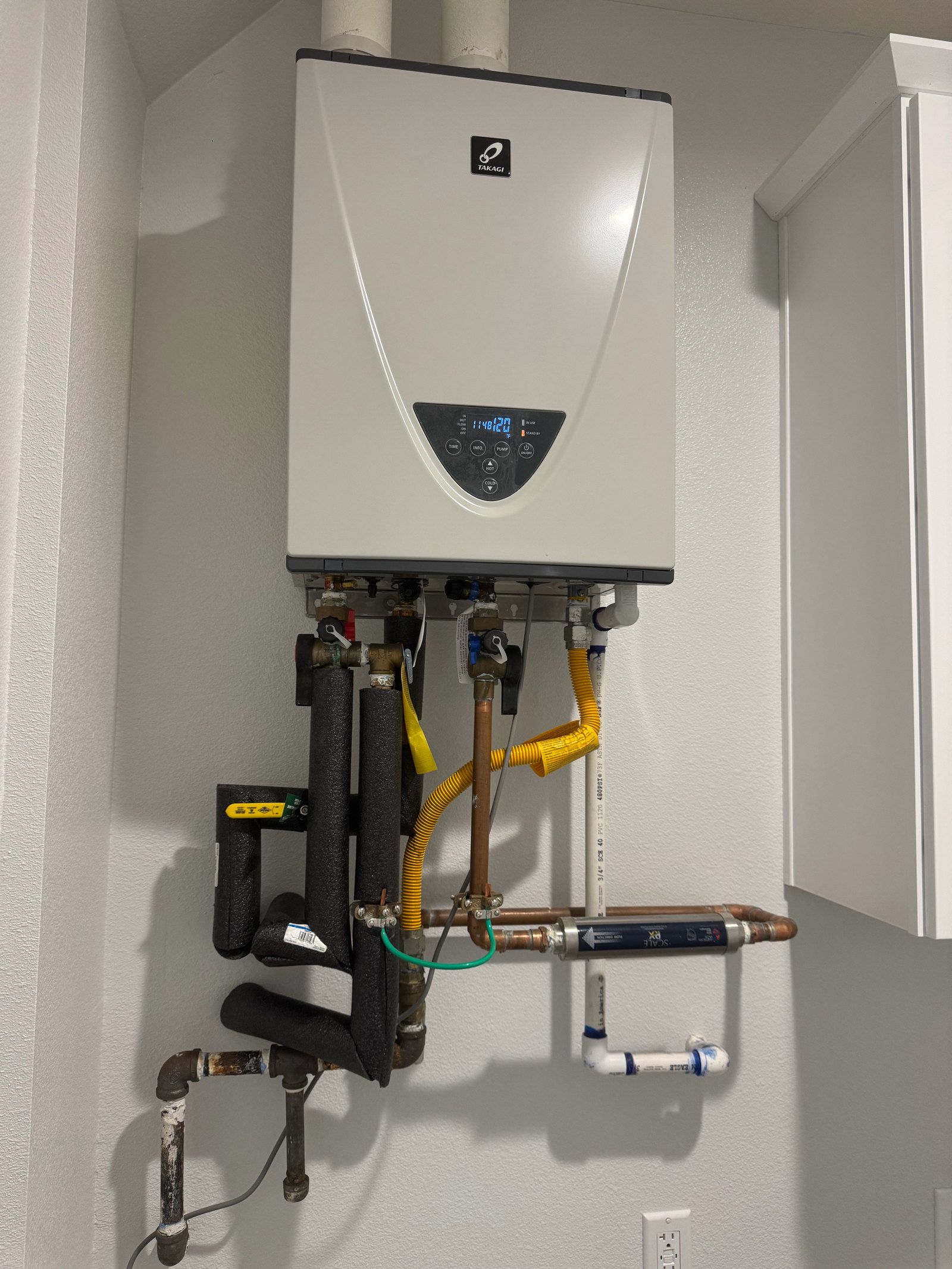
For a Noritz, the installation manual’s treatment device is a Scale Shield or a water softener. The current kit is the SS-HB-3 Scale Shield, installed on the supply ahead of the heater, with an HBC-3 refill cartridge. In a 2022 product announcement, Noritz says Scale Shield uses a polyphosphate material to sequester calcium before it enters the heater. It is not a salt softener and does not discharge brine. SupplyHouse lists a 12-month cartridge life at 15 grains of hardness or less; confirm the interval in the kit instructions for your water.
For a Navien, the manual’s treatment device is a water softener or Navien PeakFlow. PeakFlow is a chemical-free, salt-free system. Navien says the media transforms hardness minerals so they form softer microscopic scale (aragonite and vaterite) that is less likely to stick in the heat exchanger — the same idea as template-assisted crystallization (TAC). PeakFlow A is the usual residential point-of-entry option, with a listed service flow up to 10 gpm, continuous flow up to 6 gpm, and media replacement at 5 years. PeakFlow S is a smaller point-of-use unit; PeakFlow C goes up to 20 gpm. Size the unit to the house, and order through a Navien wholesaler (PeakFlow A is listed as GPWC310001AC001).
Check local rules on salt-based softeners
Some cities and water agencies restrict or ban new self-regenerating salt-based softeners that discharge brine to the community sewer, including units that regenerate with rock salt or potassium chloride. Before you install or replace a salt softener, check local plumbing and sewer rules.
Those restrictions typically do not apply to portable exchange tanks that are regenerated off-site. Salt-free conditioners and scale-prevention cartridges that do not discharge brine, including PeakFlow and Scale Shield, are usually not the appliance those rules target, but confirm that locally. I will go deeper on hard-water treatment choices, including salt-free TAC systems, in a later post.
When to do it yourself, and when to call a licensed plumber
This is general advice, not a sales pitch. A flush is a reasonable DIY job if the heater already has isolation valves, you are comfortable with a pump and a mildly acidic cleaner, and you can follow the manual, including the brand-specific mode settings. It is not a reasonable first plumbing project if you have to add valves, if a spill would be expensive, or if you cannot tell a maintenance reminder from a shutdown code.
Call a licensed plumber or an authorized factory technician if the heater has no isolation valves; if you see E016, E030, or any code that remains after a careful flush and filter cleaning; if you have a leak, a gas-supply question, or a venting issue; if the heater is still under warranty and you want the work documented; or if you are not sure about a step. Both manuals say to stop in that case. Noritz writes the flush procedure for a qualified service professional; Navien calls it somewhat complicated and, in its descaling article, recommends hiring a professional. If a professional does the flush, ask them to clean the inlet screens, note the hardness treatment in place, and leave you a dated record.
Gear I use for a tankless flush
These are the products I would actually put on a Noritz or Navien in hard water. Check the current price and your model’s connections before you order. When a kit’s circulation time is shorter than the manufacturer’s, follow Noritz or Navien.
Webstone Isolator E-X-P E2 3/4-inch tankless service valve kit. View on SupplyHouse If the heater does not already have isolation valves, start here. This lead-free, brand-neutral kit fits typical 3/4-inch Noritz and Navien connections. It includes hot and cold full-port valves, hose drains for flushing, and a 150 psi pressure-relief valve.
Chromex tankless flush kit (pump, 6-gallon bucket, hoses, and concentrated vinegar). View on Amazon A complete DIY kit: a 6-gallon bucket (which meets Navien’s 5-gallon-or-larger requirement), a 1/6 HP pump, hoses, a pump grate, and NSF/ANSI/CAN 60 concentrated vinegar that dilutes to 4 gallons. Circulate for the full time in your manual — 45 minutes on a Navien, 1 hour on a Noritz — even if the kit suggests a shorter window.
Rectorseal Calci-Free 68708 tankless descaler. View on Amazon A 1.2-pound cleaner formulated for tankless heat exchangers, if you prefer that over vinegar. Use it with a pump, hoses, and a 5-gallon or larger bucket, and still run the circulation and rinse times in your manual. A complete Rectorseal kit with the pump and bucket is also sold as model 68711 (View on Amazon).
Noritz SS-HB-3 Scale Shield water treatment kit. View on SupplyHouse The current Noritz scale-prevention kit for residential tankless heaters: a 3/4-inch NPT housing on the cold-water line ahead of the unit, with one HBC-3 polyphosphate cartridge included. It does not use salt or discharge brine. Replacement cartridges are the HBC-3 (View on SupplyHouse).
Navien PeakFlow A scale-prevention system. PeakFlow is the salt-free treatment Navien’s installation manual names. PeakFlow A is a residential point-of-entry unit, with media that Navien says lasts up to 5 years. See the official PeakFlow A product page for specifications and the current part number, and order through a Navien wholesaler. Confirm the flow rating against the house before you buy.
Zilmet ActivFlo 1-inch salt-free water conditioner. View on SupplyHouse A whole-house, no-salt conditioner, useful where a new self-regenerating salt softener is restricted or you prefer not to discharge brine. It uses a catalytic action to form aragonite crystals rather than hard calcite scale, does not require power or a drain, and is not a substitute for flushing a heater that has already scaled up. I will compare salt-free conditioners more fully in the hard-water post.
Stay in the loop
If you want hard-water and tankless maintenance updates as rebate rules and manufacturer guidance change, you can use the signup below.
If you are rebuilding after the Eaton Fire, I also have a plumbing permit checklist for Altadena and Pasadena. A follow-up post on hard water and softener alternatives is planned; I will link it here when it goes live.
Disclaimer
This article is general information, current as of November 2026. It is not a warranty interpretation, a repair procedure for every model, or a substitute for the installation and owner’s manuals that came with your water heater. Confirm hardness with your water utility’s latest consumer confidence report, and confirm flush steps, error codes, and warranty terms with Noritz or Navien for your exact model before you begin. Product links are affiliate links, as disclosed above.
Related guides
-
Rebuilding After the Eaton Fire: A Plumbing Permit Checklist for Altadena and Pasadena Homes
A plumbing permit checklist for Eaton Fire rebuilds in Altadena and Pasadena, plus plumber-recommended gear and official rebate links.
Read the guide